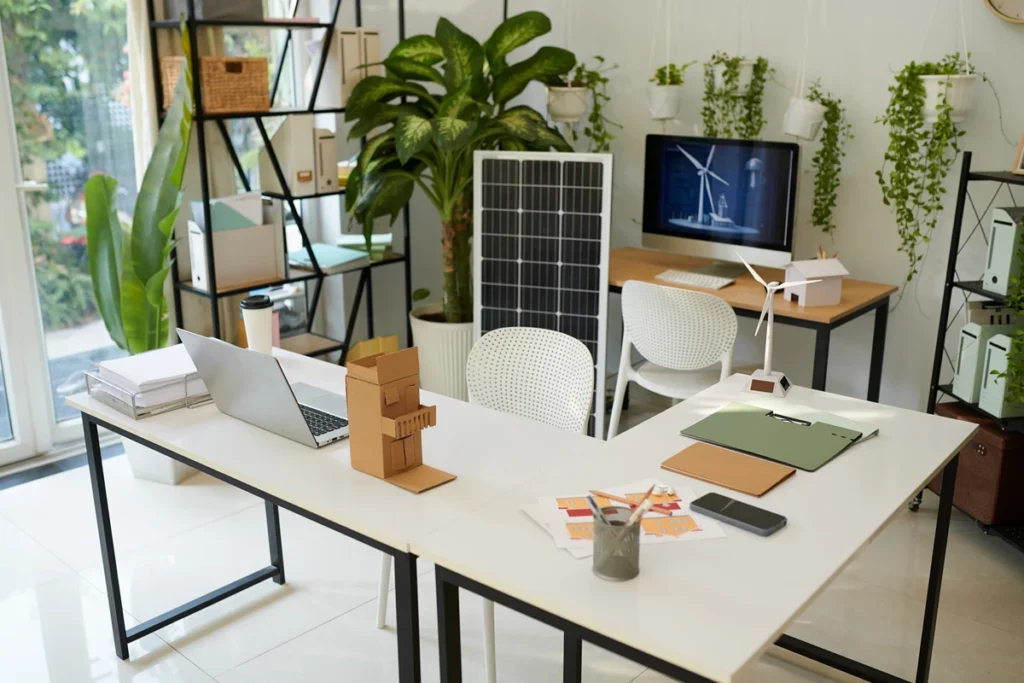
If you’ve wondered, “How can offices be more environmentally friendly?”, you have come to the right place. With growing concern about climate change and environmental sustainability, businesses are taking meaningful steps to reduce their carbon footprint and promote eco-friendly practices.
In this blog, we will explore practical ways for offices to become more environmentally friendly. We will also examine the environmental benefit of serviced offices and the role they can play in creating a more sustainable workplace.
The Environmental Benefit of Serviced Offices
When an organisation runs an independent commercial space, it must often light, cool, and maintain the entire space, even when half the desks are empty. Shared workspaces reduce unnecessary waste by enabling multiple businesses to access the same facilities and resources. Moving to a shared environment usually leads to:
- Less energy waste through centralised heating and cooling systems
- Lower water use with shared facilities
- Reduced paper consumption via shared digital infrastructure, and
- Smarter use of shared resources, from coffee machines to conference rooms.
Which Shared Amenities Support a More Sustainable Office?
Sharing premium amenities in one central location is usually much better for the environment than sourcing them separately for each business. When a shared workspace manages common facilities, they are used more efficiently throughout the day.
Here is how shared amenities lower your daily footprint:
- Plug-and-play workspaces: Pre-wired suites reduce fit-out waste and help avoid wasting materials like timber, plasterboard, flooring, and wiring each time a tenant moves.
- Meeting and board rooms: One shared meeting room uses fewer resources than multiple private meeting rooms across separate offices.
- Stocked kitchen: A single central kitchen is more energy-efficient than multiple refrigerators and dishwashers in separate company break rooms.
- HD video conferencing: Reliable video conferencing reduces the need for unnecessary in-person meetings and travel.
- Business-grade internet: A shared high-speed internet connection removes the need for each company to set up and manage its own separate connection and equipment.
- Breakout space: Shared lounges and outdoor courtyards make better use of available space, giving everyone a place to relax without the need for extra rooms.
- Reception services: Mail handling by a single front-desk team removes the need for multiple separate reception areas across different offices.
- Networking events: Events hosted in the same building reduce the need for members to travel long distances to make industry connections.
- Parking spaces: Centralised parking helps reduce traffic around the building and reduces the time vehicles spend waiting on the road.
- 24/7 access and security: With round-the-clock access, smart lighting and security features operate only when needed, avoiding unnecessary energy use.
How Do Office Suites Help Small Businesses Work Smarter?
Office suites help teams work together in a dedicated space while still benefiting from shared infrastructure. Growing businesses and creative agencies often need to balance their professional activities with efficient resource usage. By choosing a private suite within a larger coworking ecosystem, these teams avoid buying duplicate equipment such as large printers, espresso machines, and networking hardware.
Shared office infrastructure is especially useful for growing businesses because it can scale easily without extra setup. Choosing such an arrangement helps creative teams achieve:
- Less equipment waste from discarded office technology
- Lower utility usage through smartly managed building systems
- Reduced administrative setup when moving into a new office space
- Easier day-to-day operations with shared resources
What Small Changes Make an Office More Environmentally Friendly?
Other than the building itself, daily habits also play a big role in your overall carbon footprint. If you are wondering how offices can be more environmentally friendly day-to-day, the answer lies in simple changes and consistent habits. Small adjustments to your daily workflow help reduce unnecessary waste.
Here are some practical steps to make your daily operations more sustainable:
- Use cloud storage, digital signatures, and online document management systems instead of paper-based filing.
- Use energy-efficient lighting and natural light whenever possible.
- Encourage the use of reusable kitchen items instead of single-use coffee cups and plastic cutlery.
- Set up separate recycling bins for paper, plastics, and electronic waste.
- Reduce printing where possible, reserving it for important documents.
- Use meeting spaces wisely by turning off screens and lights when leaving the room.
- Encourage remote conferencing when physical travel is unnecessary.
These practical steps help keep your sustainability efforts realistic, effective, and easy for everyone on the team to follow.
Building a Greener Future With Your Team
When exploring how offices can be more environmentally friendly, the answer often begins with selecting a greener workplace from day one. By choosing shared spaces, thoughtful amenities, and smarter office design, businesses can reduce their environmental impact while keeping operations streamlined.
Book a tour at The Factory and see how a more sustainable workspace can support your business. We will be happy to show you around and answer any questions you may have.
Frequently Asked Questions About Green Workspaces
What makes an office environmentally friendly?
An environmentally friendly office reduces its carbon footprint by minimising energy consumption, lowering water usage, and reducing physical waste. Choosing an office suite in a shared workspace that features eco-friendly design and amenities also ensures your business follows environmentally responsible practices.
How do serviced offices help reduce waste?
Serviced offices reduce waste by sharing resources. Instead of each business investing in its own appliances and amenities, these are provided for shared use across the workspace.
Are shared office spaces more sustainable?
Shared office spaces are more sustainable because they make better use of a single building. Heating, cooling, and powering a single centralised space for multiple businesses consumes less energy than powering separate office spaces for each business.
Do eco-friendly offices cost more for small businesses?
Eco-friendly offices do not always cost more for small businesses. In many cases, they can help reduce costs over time. Shared spaces and serviced offices can lower upfront expenses by removing the need to buy furniture, install internet, or set up kitchen facilities. They can also reduce ongoing costs because utilities and other essentials are often shared.
Can a luxurious workspace still be environmentally friendly?
A high-end workspace can still be sustainable because many of its features are shared. Spaces such as breakout areas and kitchens are used by multiple businesses, reducing the need to duplicate resources and lowering the overall environmental impact.